
When embarking on a new brand identity project, it is easy to get hyper-focused on picking the perfect color palette or debating between a subtle pastel green and a bold royal blue. But before you can even think about color psychology or vector paths, you must answer a foundational architectural question: What structural container will your brand live in?
A logo is not just a singular concept. In the professional identity landscape, logos are categorized into distinct structural frameworks, each possessing its own psychological weight, technical constraints, and strategic advantages. Choosing the wrong type can hobble a startup’s market penetration, while choosing the right one can accelerate global recognition.
For founders, marketers, and graphic designers navigating identity strategy here on logodesigninspo.com, this comprehensive guide breaks down the three heavyweights of the design world—the Monogram, the Wordmark, and the Emblem—and outlines precisely how to choose the perfect execution for your business model.
1. The Monogram (Lettermark): The Power of Abbreviation
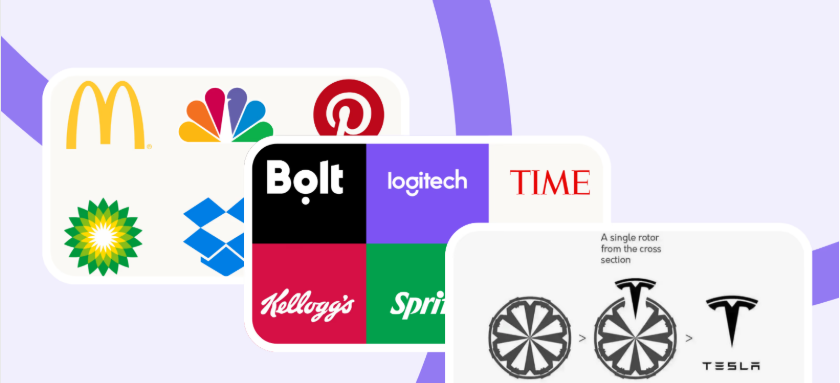
A Monogram, often referred to in design circles as a lettermark, is a typography-based logo that distills a brand down to its core initials. Think of international powerhouses like IBM, HBO, NASA, HP, or luxury fashion titans like Louis Vuitton (LV) and Gucci.
[Complex Corporate Name] ➡️ H.O.M.E. B.O.X. O.F.F.I.C.E. ➡️ [Monogram] HBO
Instead of forcing consumers to read and memorize a clunky, multi-word corporate title, the monogram condenses the visual footprint into a snappy, memorable geometric acronym.
🎯 When to Choose a Monogram:
-
The Name is a Tongue-Twister: If your company name is long, difficult to pronounce, or spans three to four words (e.g., Minnesota Mining and Manufacturing became 3M), a monogram is an act of visual mercy for your customers.
-
Global Market Expansion: Letters are easier to read and identify across varying language barriers than long strings of English text.
-
Luxury & Prestige Positioning: Interlocking or beautifully typeset initials carry a historic association with royal seals and customized artisanal craftsmanship.
💡 Pro-Design Tip:
Because a monogram relies entirely on a few letters, you cannot use standard, unmodified system fonts. The typography must be custom-sculpted. Pay extreme attention to the negative spaces where the character legs overlap or intertwine, ensuring the silhouette remains legible even when stamped at a microscopic scale on a smartphone screen.
2. The Wordmark (Logotype): Pure Typographic Identity
A Wordmark, or logotype, dispenses with symbols, icons, and abbreviations entirely. It focuses 100% of its visual energy on spelling out the company’s full name using stylized, highly customized typography. Iconic examples include Google, Coca-Cola, Visa, Sony, and FedEx.
When you look at a wordmark, there is zero ambiguity. The logo is the name, and the name is the logo.
🎯 When to Choose a Wordmark:
-
You Are a New Brand Entering the Market: If you are a fresh startup fighting for survival, you do not have the billions of dollars required to educate the public on what an abstract symbol means. A wordmark builds immediate name recognition every single time a consumer glances at your storefront or website header.
-
Your Name is Short and Punchy: If your brand name is one or two syllables (e.g., eBay, Braun, Jeep), a wordmark is incredibly efficient. It doesn’t need an auxiliary icon cluttering its real estate.
-
You Value Transparency and Clarity: Wordmarks project an air of straightforward, no-nonsense professionalism, which is why they dominate the tech, finance, and legal sectors.
💡 Pro-Design Tip:
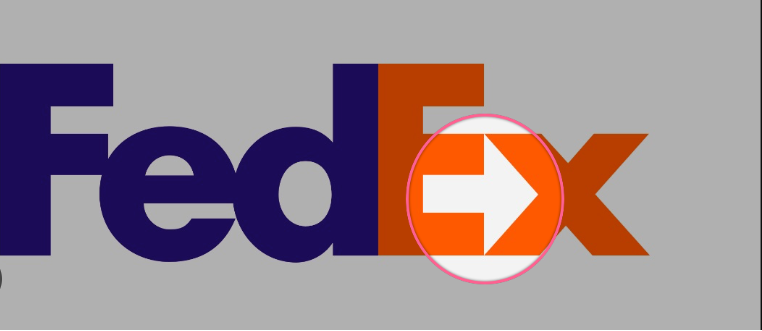
The danger of a wordmark is running into a phenomenon known as “blandification”—where a logo looks like someone just typed a word out in a generic sans-serif font. To make a wordmark premium, look for a single structural anchor point to customize. Crop a terminal, connect two adjacent letters (ligatures), or customize the counter spaces to inject a subtle, hidden narrative (like the famous negative-space arrow in the FedEx wordmark).
3. The Emblem: Tradition, Heritage, and Unified Badges
An Emblem logo features text, typography, or an icon securely locked inside a strict geometric boundary, crest, shield, or badge. It is the oldest form of visual branding, dating back to medieval coats of arms and royal family crests. Modern iterations include Starbucks, Porsche, Harley-Davidson, BMW, and virtually every historic university or sports team on earth.
An emblem operates as a unified stamp; the visual elements and the text are structurally interdependent and cannot be easily separated without destroying the integrity of the mark.
🎯 When to Choose an Emblem:
-
You Want to Project Legacy and Authority: Emblems scream heritage, institutional trust, and time-tested reliability. If you are launching a private school, a law firm, an automotive brand, or a boutique artisanal coffee roastery, an emblem commands instant respect.
-
Building a Tight-Knit Community: Because emblems resemble badges or patches, consumers love wearing them on clothing, hats, or stamping them onto car bumpers. They act as flags for subcultures (e.g., the Harley-Davidson rider community).
-
Physical Product Packaging Consistency: An emblem functions as a self-contained sticker, making it exceptionally easy to print uniformly onto bottle labels, cans, or cardboard boxes.
💡 Pro-Design Tip:
The classic achilles’ heel of the emblem is scalability. Because emblems historically contain intricate lines, packed text circles, and dense illustrations, they turn into an unreadable mess when shrunken down to a mobile phone viewport. If you design an emblem, ensure you build a responsive system (as outlined in our previous Design Guides) where the text can drop away at small breakpoints, leaving a clean, simplified shield or icon behind.
📊 Master Reference Matrix: Evaluating Your Identity Architecture
To take the subjective guesswork out of your design discovery phase, cross-reference your business parameters against this field-tested comparison chart:
| Strategic Metric | The Monogram (Lettermark) | The Wordmark (Logotype) | The Emblem (Badge/Crest) |
| Visual Complexity | Minimal / Geometric | Clean / Typographic | High / Dense / Illustrative |
| Startup Friendliness | Low (Requires marketing to explain the initials) | Excellent (Builds instant name recognition) | Medium (Builds strong vibe, but text can be small) |
| Mobile Scalability | Flawless (Fits beautifully into app icons) | Great (Requires horizontal width management) | Poor (Requires a modular responsive backup mark) |
| Core Psychological Vibe | Elite, Modern, High-Fashion | Transparent, Stable, Accessible | Prestigious, Traditional, Grounded |
| Best Industries | Luxury, Broadcast, Complex Conglomerates | Tech, SaaS, Finance, E-Commerce | Automotive, Food & Bev, Sports, Education |
4. The Decision Engine: 3 Questions to Ask Before You Design
If you are stuck staring at a blank canvas trying to choose between these three formats, run your brand concept through this clinical decision matrix:
Question A: How long is your company name?
If your name is 1-2 short words, lean heavily toward a Wordmark. If it is 3 or more words, immediately pivot toward a Monogram to save visual real estate.
Question B: Where will your logo be viewed 90% of the time?
If your business is a mobile app or a wearable tech software platform, an intricate Emblem will fail technically on small screens. You need the crisp, geometric simplicity of a Monogram or a highly scalable Wordmark. However, if your logo lives on a physical product like a craft beer can or a premium leather jacket, an Emblem will provide unmatched shelf presence.
Question C: What is your relationship with tradition?
Are you trying to disrupt an old industry with futuristic, radical technology? Choose a sleek Wordmark. Are you trying to honor centuries of craftsmanship, organic recipes, or local community values? Lean into the protective, authoritative embrace of an Emblem.
Ultimately, a logo is a tool of strategic communication. By choosing a framework based on business logistics, name anatomy, and industry positioning rather than personal aesthetic taste, you ensure your visual identity stands on a bedrock of undeniable structural logic.
Leave a Reply