
When people think of a logo, they often think of an icon—a swoosh, an apple, a golden arch. But some of the most iconic and brilliant logos in the world don’t rely on separate symbols at all. Brands like Google, FedEx, Sony, and Coca-Cola rely entirely on wordmarks or text-only logos.
Designing a text-only logo is the ultimate test of graphic restraint. Anyone can slap a standard font onto a canvas, but creating a clever typographic logo means manipulating the letters themselves to reveal a hidden layer of meaning. By tweaking the spacing, subtracting non-essential lines, or playing with negative space, you create a visual puzzle that makes the viewer stop, look closer, and remember your brand forever.
To fuel your typography engine on logodesigninspo.com, here are 20 text-only logo ideas with a creative twist.
1. Negative Space & Subtraction (Ideas 1–5)
What you leave out of a typographic logo is just as important as what you put in. Subtraction forces the viewer’s brain to fill in the missing pieces, creating an engaging visual experience.
-
The Invisible Crossbar: A minimalist sans-serif wordmark where the horizontal crossbars of the capital letters (like ‘A’, ‘H’, or ‘E’) are completely removed, creating a futuristic, wide-open feel.
-
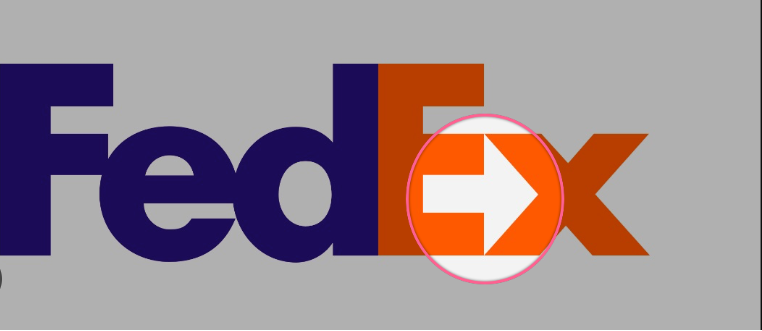
The Hidden Forward Momentum: A bold, heavy block wordmark where the negative space trapped between two adjacent letters (like a capital ‘E’ and ‘X’) seamlessly forms a sharp, forward-pointing arrow.
-
The Sliced Baseline: A clean, horizontal slice of negative space strikes straight through the lower third of the entire wordmark, making the text look beautifully deconstructed yet perfectly legible.
-
The Missing Joint Stencil: A geometric, modern font where small, precise gaps are sliced out right at the corners or joints where the vertical stems meet the horizontal bars of each letter.
-
The Silhouette Drop: A heavy typography-focused layout where the primary business name is carved out in pure negative space inside a solid black or metallic rectangular block.
2. Structural Twists & Structural Play (Ideas 6–10)
By manipulating the physical structure of a single letter within a word, you can communicate your brand’s core industry without ever adding a separate icon.
-
The Architectural Arch: A wordmark where a specific letter (like an ‘M’ or an ‘H’) is stretched upward and curved at the top into a perfect semi-circular arch, evoking a physical gateway or storefront entrance.
-
The Chewed Terminal: A playful, chunky block font where the outer corner of a single letter looks like it has been cleanly “bitten” into, perfect for food apps, bakeries, or dental brands.
-
The Integrated Tool Stem: A text-only logo where the vertical stem of a letter (like a ‘T’, ‘L’, or ‘I’) is subtly modified into a sleek tool, such as a pen tip, a keyhole, or a razor blade.
-
The Mirror Glyph: A wordmark where one specific, central letter is completely flipped or mirrored horizontally, subverting the viewer’s expectations to represent symmetry, reflection, or data dualism.
-
The Continuous Monoline: A flowing cursive script logo where the line thickness remains perfectly uniform from start to finish, never breaking as it loops through the entire brand name like a strand of premium silk thread.
3. Kinetic Motion & Spatial Scaling (Ideas 11–15)
Text doesn’t have to sit statically on a page. By playing with scale, weight, and slant, typography can project high-octane speed, digital data transfer, or monumental scale.
-
The Kinetic Slant: An ultra-condensed, heavy sans-serif typeface that leans forward at an exaggerated angle, with a sharp diagonal slash on the terminal edges to project maximum speed and velocity.
-
The Shifted Baseline Story: A text-only logo where one single letter inside the word is scaled down and shifted upward to rest high above the baseline, instantly signaling disruptive growth or standing out from the crowd.
-
The Extended Tracking Shift: A bold serif font where the spacing between the characters (tracking) is dramatically wide, but one key pair of letters is pushed close enough to touch, breaking the pattern with high-fashion intent.
-
The Step-Down Scale Stack: A stacked wordmark where the first word is incredibly bold and heavy, while the second word underneath is rendered in an ultra-thin hairline font but stretched out to match the exact same physical width.
-
The Terminal Underscore: A clean, tech-centric monospace typeface where the final letter of the brand name transitions smoothly into a solid terminal underscore line (
_), beautifully mimicking a developer’s code prompt.
4. Optical Illusions & Overlapping Paths (Ideas 16–20)
These concepts challenge the visual plane by playing with dimension, depth, and structural continuity, giving flat text an unexpected 3D or conceptual twist.
-
The Multi-Line Ribbon Trail: A typographic logo where the individual letter strokes are made of three or four parallel, tightly packed vector lines that loop and bend together like retro 1970s racing stripes.
-
The Overlapping Ligature Chain: A clean sans-serif wordmark where the letters are pushed tightly together so that their shared strokes merge seamlessly, turning the text into an unbroken, cohesive chain.
-
The Shadow Wordmark: A highly minimalist conceptual logo where the letters themselves are completely invisible (white on white), and the brand name is defined entirely by a soft, sharp 3D shadow layer projecting beneath them.
-
The Liquid Mercury Melt: A custom text logo where the sharp corners of the letters are smoothed out into organic, radiused curves, making the typography look like it was cast out of a single drop of liquid gold or mercury.
-
The Infinite Horizon Intersection: A razor-thin, perfectly straight horizontal line that cuts right through the exact visual center of an ultra-bold wordmark, splitting the top and bottom halves with architectural precision.
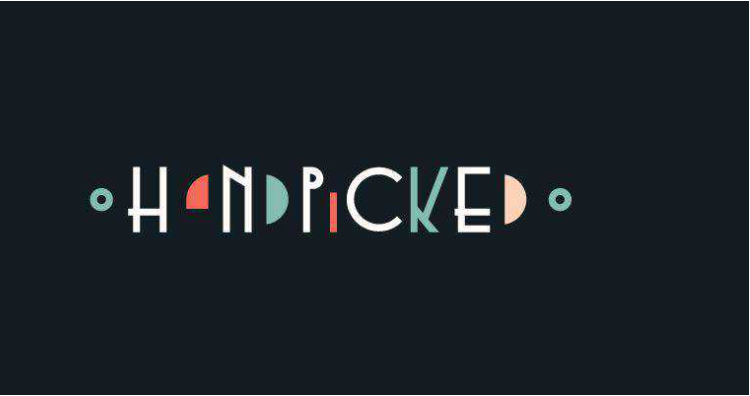
💡 The Guardrails for Text-Only Logo Success
When executing a typographic logo with a creative twist, the line between “brilliant design” and “unreadable clutter” is paper-thin. Keep these three rules in mind to protect your brand identity:
1. Guard Your Legibility Fiercely: A typographic twist can be incredibly clever, but if a customer struggles to read your company name in a fraction of a second, the logo has fundamentally failed. The creative twist should enhance the text, never obscure it.
2. The 10% Innovation Rule: Never try to modify every single letter in a wordmark. If you add a twist to the ‘A’, leave the rest of the letters clean. Choose one single point of innovation per logo—a hidden arrow, a missing crossbar, or a structural twist—and let the rest of the typography serve as a clean, stable foundation.
3. Master the Kerning Grid: When you strip away illustrations, the empty spaces between your letters (kerning) become highly visible design elements. Spend extra time manually adjusting the spatial balance between every single glyph to ensure the visual weight distribution feels completely effortless and professional.
Leave a Reply