

Whenever a list of the “most expensive logos in history” pops up on the internet, one entry never fails to make designers and business owners double-take: British Petroleum (BP) and their $211 million rebrand.
To the average onlooker, spending nine figures on a stylized green-and-yellow sunburst seems like the pinnacle of corporate madness. Did an agency pull off the ultimate hustle, or did a group of executives drastically lose their minds?
The short answer is: neither.
As identity designers dissecting case studies here at logodesigninspo.com, we need to clear up the single biggest misconception surrounding this project. BP didn’t pay an agency $211 million to export a .vector file. The actual design and strategy fee paid to Landor Associates was roughly $4.6 million—still a massive sum, but standard for an enterprise oil giant.
The remaining $206 million? That was the cost of radical, physical metamorphosis.
The Strategic Catalyst: Moving “Beyond Petroleum”
To understand why the rebrand cost so much, you have to understand the existential crisis BP was facing in the late 1990s and early 2000s. Following a series of massive mergers (most notably with Amoco), the company had evolved into a global powerhouse, but its visual identity was stuck in the past.
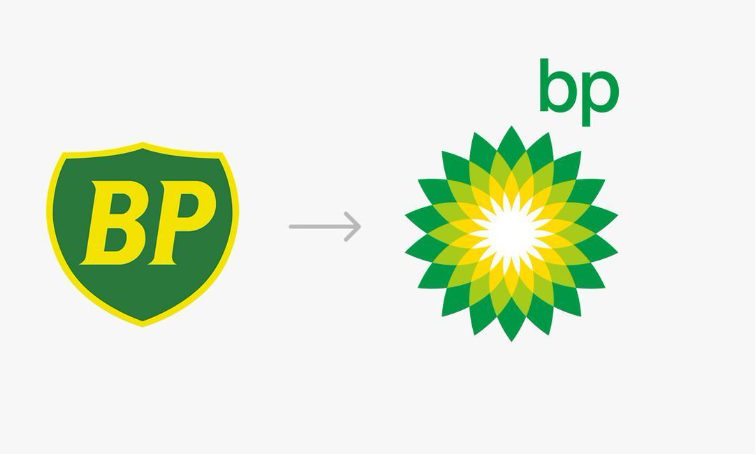
For nearly 70 years, BP had utilized a traditional, rigid shield emblem. It screamed “industrial oil drilling” at a time when the public, investors, and governments were beginning to demand environmental accountability.
BP’s leadership team made a highly calculated, high-risk bet. They decided to pivot their positioning from an international oil company to an integrated energy company. They introduced a legendary corporate tagline: “Beyond Petroleum.”
To make the public believe this shift, the heavy, defensive green shield had to go.
Deconstructing the ‘Helios’ Logo Design
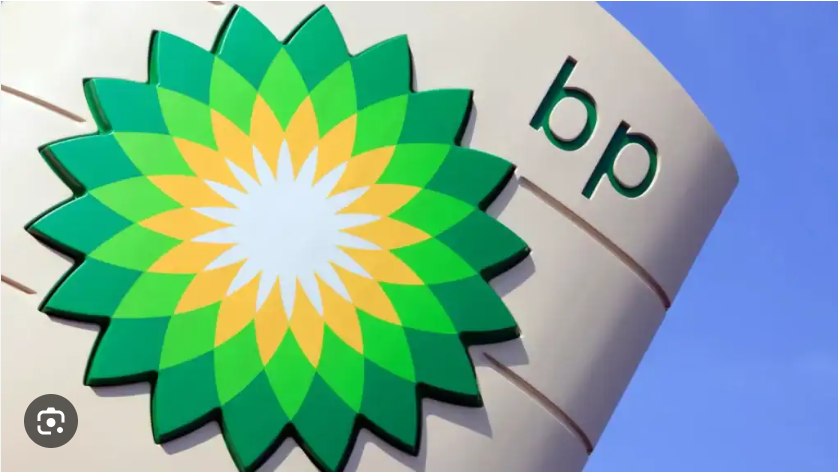
Landor Associates replaced the industrial shield with an organic, interlocking geometric icon named The Helios (after the Greek god of the sun).
The design team abandoned traditional corporate styling cues for a multi-layered symmetrical shape that operates on deep color psychology:
-
The Yellow Center: Represents the sun, solar energy, and the core genesis of all power on Earth.
-
The Interlocking Radiants: The sharp, overlapping geometric shapes double as stylized leaves and sunflower petals, inherently suggesting organic growth and a harmony with nature.
-
The Color Spectrum: Shifting from bright yellow to vibrant light-green and ending in deep forest green, the gradient directly evokes clean energy, sustainability, and environmental preservation.
-
The Typography: The stark, uppercase “BP” initials were dropped down to a friendly, modern, lowercase sans-serif font tucked neatly into the top-right corner, making the massive corporation feel approachable.
The $211 Million Breakdown: Real-World Implementation
Why did executing this simple graphic cost a fortune? Because a logo doesn’t live in a digital vacuum; it lives on real-world infrastructure.
When a multi-national oil company changes its identity, every single physical asset on the planet must be altered to avoid legal and brand fracturing. Let’s look at the sheer scale of the rollout:
| Rollout Asset | Estimated Scope of Implementation |
| Retail Gas Stations | Complete signage teardown and reconstruction across 28,000+ locations worldwide. |
| Industrial Fuel Pumps | Re-wrapping, painting, and digital UI updates on over 100,000 individual fueling nozzles. |
| Corporate Fleet | Complete graphic overhauls for thousands of oceanic tankers, delivery trucks, and service vehicles. |
| Employee Uniforms | Redesigning and manufacturing apparel for over 100,000 global employees. |
| Legal & Global TM | Securing trademark protections for the interlocking shape in over 100 sovereign nations. |
When you divide $211 million across tens of thousands of global physical facilities, the cost breaks down to roughly $7,500 per station. Seen through that logistical lens, the budget becomes entirely rational.
The Controversy: The Danger of “Greenwashing”
The Helios logo is highly regarded as a technical design masterpiece, but it serves as a cautionary tale about brand alignment.
By launching the “Beyond Petroleum” campaign, BP set an incredibly high ethical bar for itself. Environmental groups quickly pointed out that despite the green flower logo, more than 95% of BP’s core revenue still came directly from fossil fuels.
The Stress Test: The ultimate fracturing of the brand identity occurred during the catastrophic 2010 Deepwater Horizon oil spill. For months, international news channels broadcasted a live feed of oil pouring into the Gulf of Mexico, with the pristine, green-and-yellow eco-friendly Helios logo stamped right in the corner of the screen.
The juxtaposition was devastating. It highlighted the dangerous chasm that can form when an identity projects a philosophy that the underlying business model hasn’t fully caught up to yet.
Key Takeaways for Identity Designers
-
Logos Carry Real-World Weight: As identity designers, we often focus on pixels and vector nodes. This case study reminds us that a logo change for a brick-and-mortar business triggers a massive logistical and financial footprint. Design with application costs in mind.
-
Authenticity Trumps Aesthetics: A logo cannot fix a structural perception problem on its own. The design must reflect organizational reality. If a brand’s visual identity outpaces its actual corporate behavior, the public will eventually flag it as disingenuous.
-
True Rebranding is an Asset Overhaul: If a company thinks a rebrand means spending $5,000 on a new icon while keeping their old storefronts, outdated uniforms, and mismatched marketing materials, they aren’t rebranding—they are just putting a band-aid on a broken system. True brand building requires full immersion.

Leave a Reply